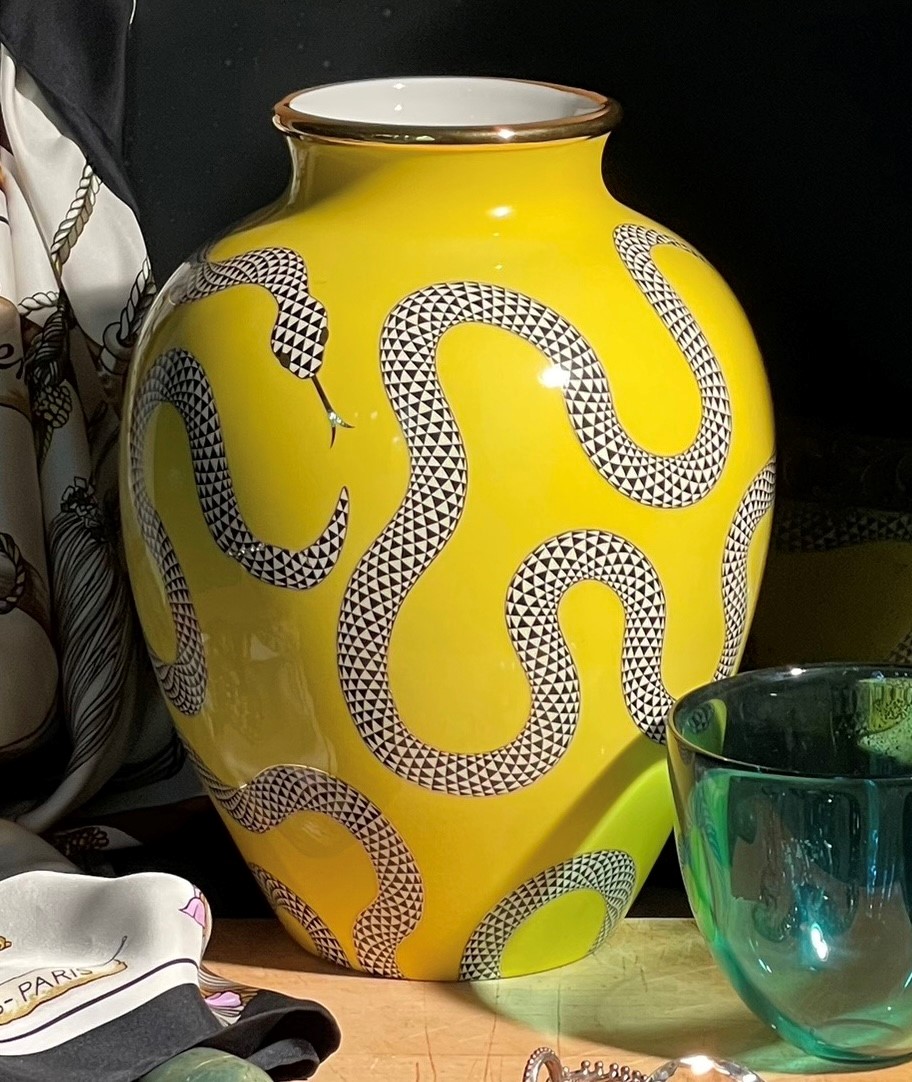
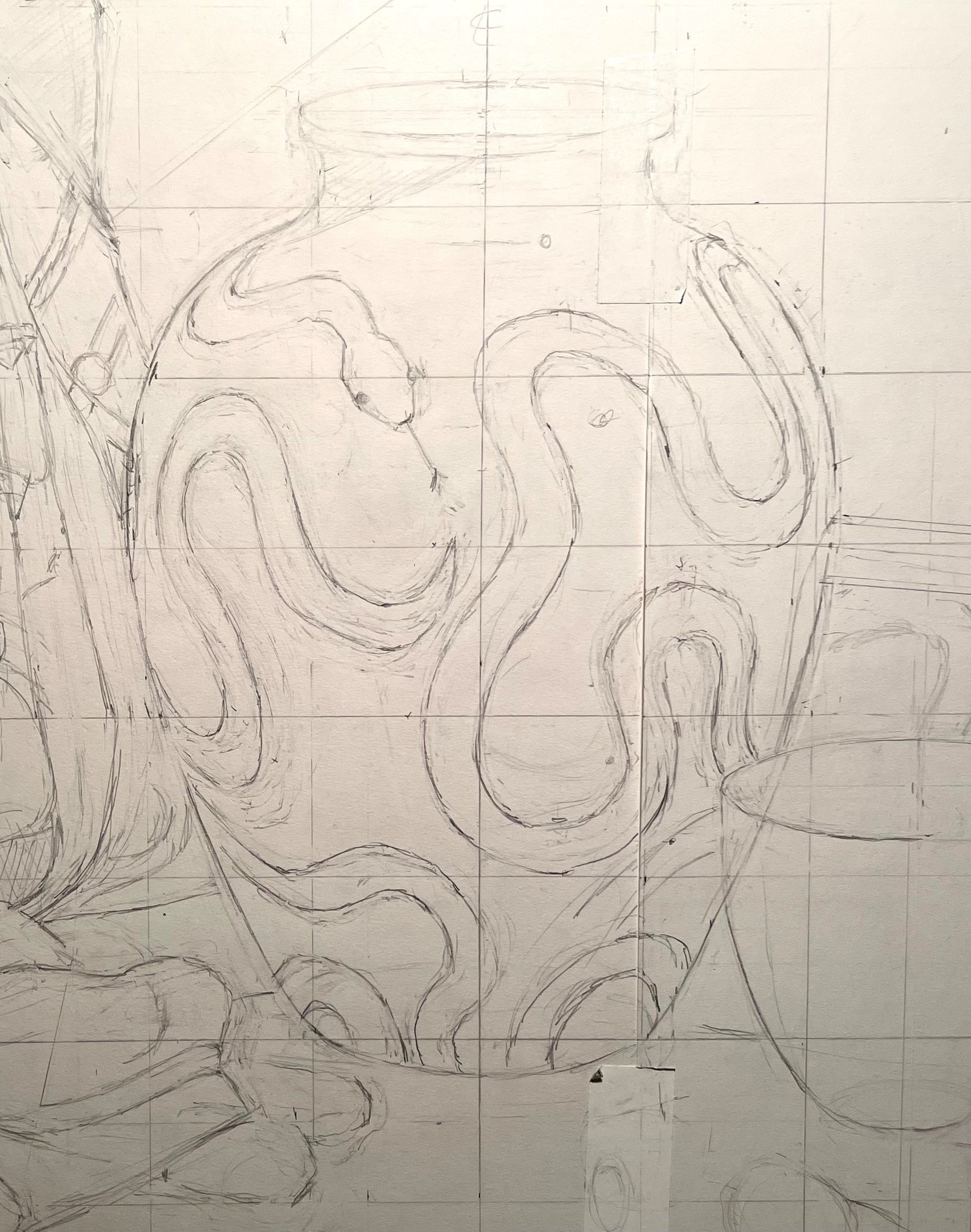
Jonathan Adler sent me this fabulous snake vase to include in a still life! I was really excited about painting it, but didn’t really consider how difficult it would be to draw and paint. I usually think that I can figure out how to paint most anything, but this took all my resolve and patience. The main problem was that simply suggesting the pattern of the snake scales wouldn’t work because the vase was the focal point of my composition. It would look odd not to see the pattern clearly. I could mute the details in the shadow areas, but that presented its own difficulties! (More on this later.) I also couldn’t work it out in my pencil drawing ahead of time, because transferring something so complex would never work. I ended up having to ‘draw’ with paint, which is never easy. In my drawing, below, I just indicated the outlines of the snake. This was harder than you might think. Curves are subtle and often hard to capture correctly. I’d return to my drawing the next day and see my errors clearly.
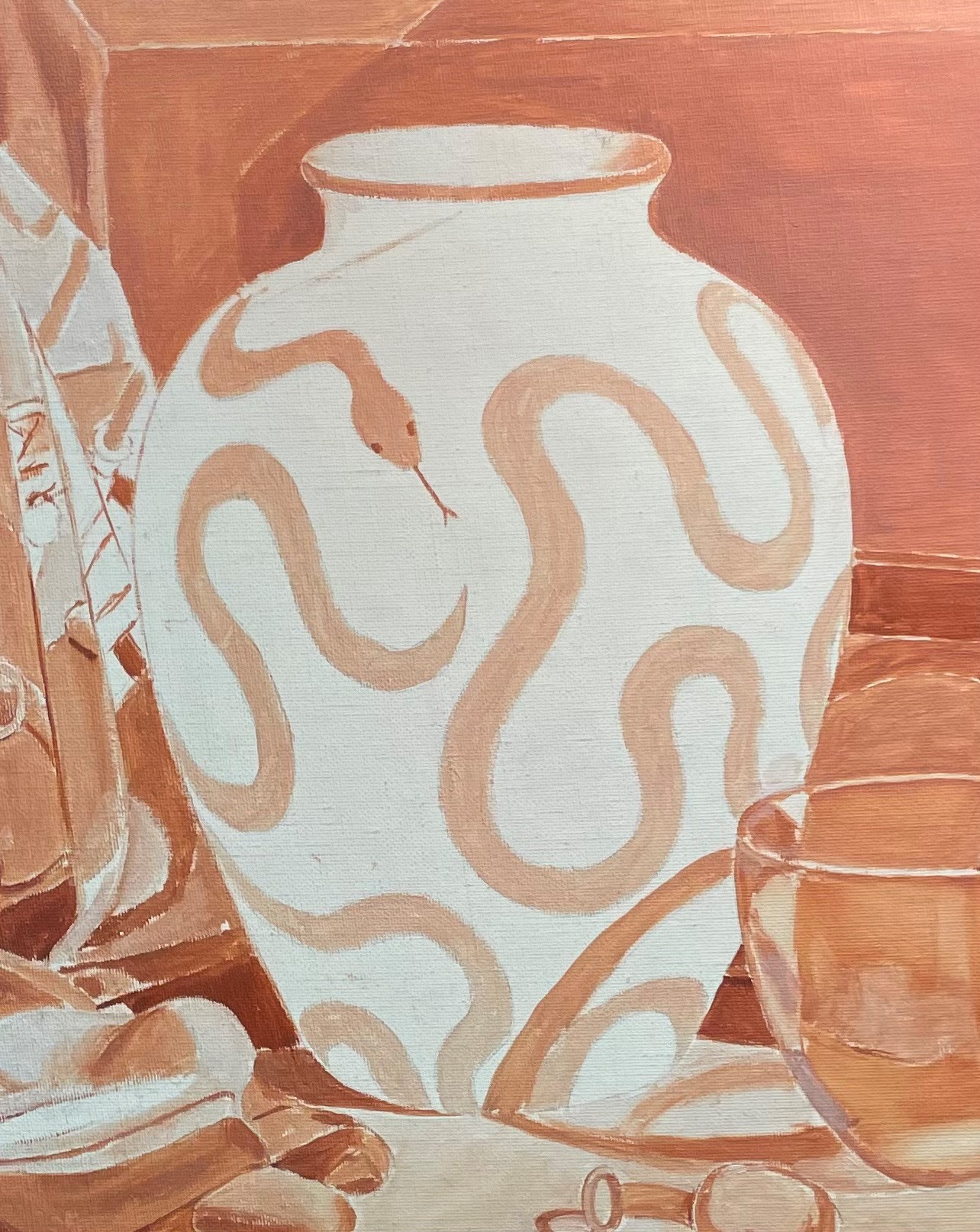
After I transferred my drawing to canvas, I did a monochrome underpainting. I never include small details on the underpainting, because I’d just have to paint over it. No point in duplicating such effort.
The next step was to put in the local colors, as best as I could guess at this early stage.
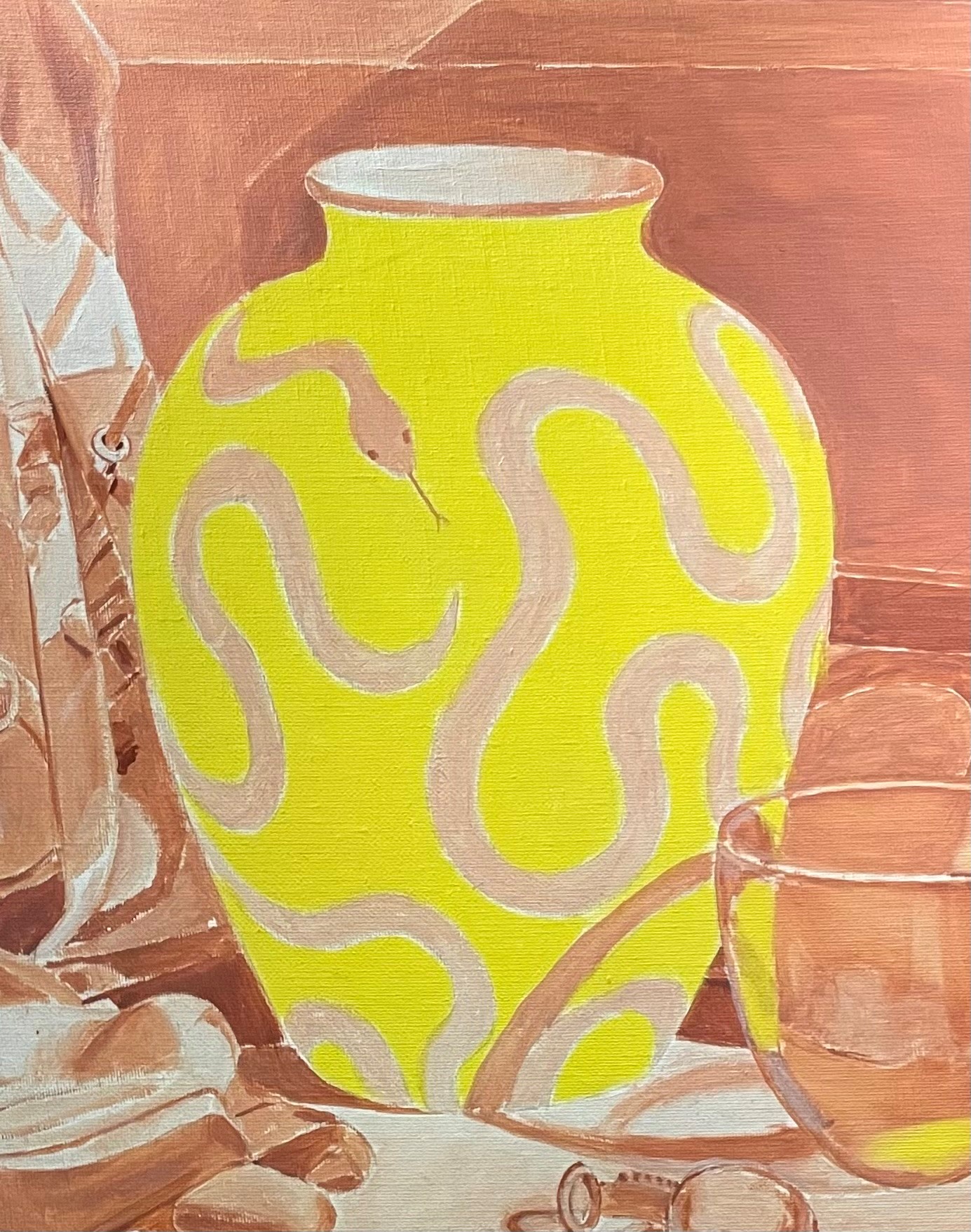

My initial idea was to paint in the lighter color as a background, and then do the small triangles in the darker value. It was hard to know what value to paint this white. The pattern was so broken up in tiny triangles, that to really see values was hard. I could see the general value of the whole snake if I squinted my eyes, but the individual triangles were almost impossible. I took a guess, knowing I’d have to come back many times to correct.
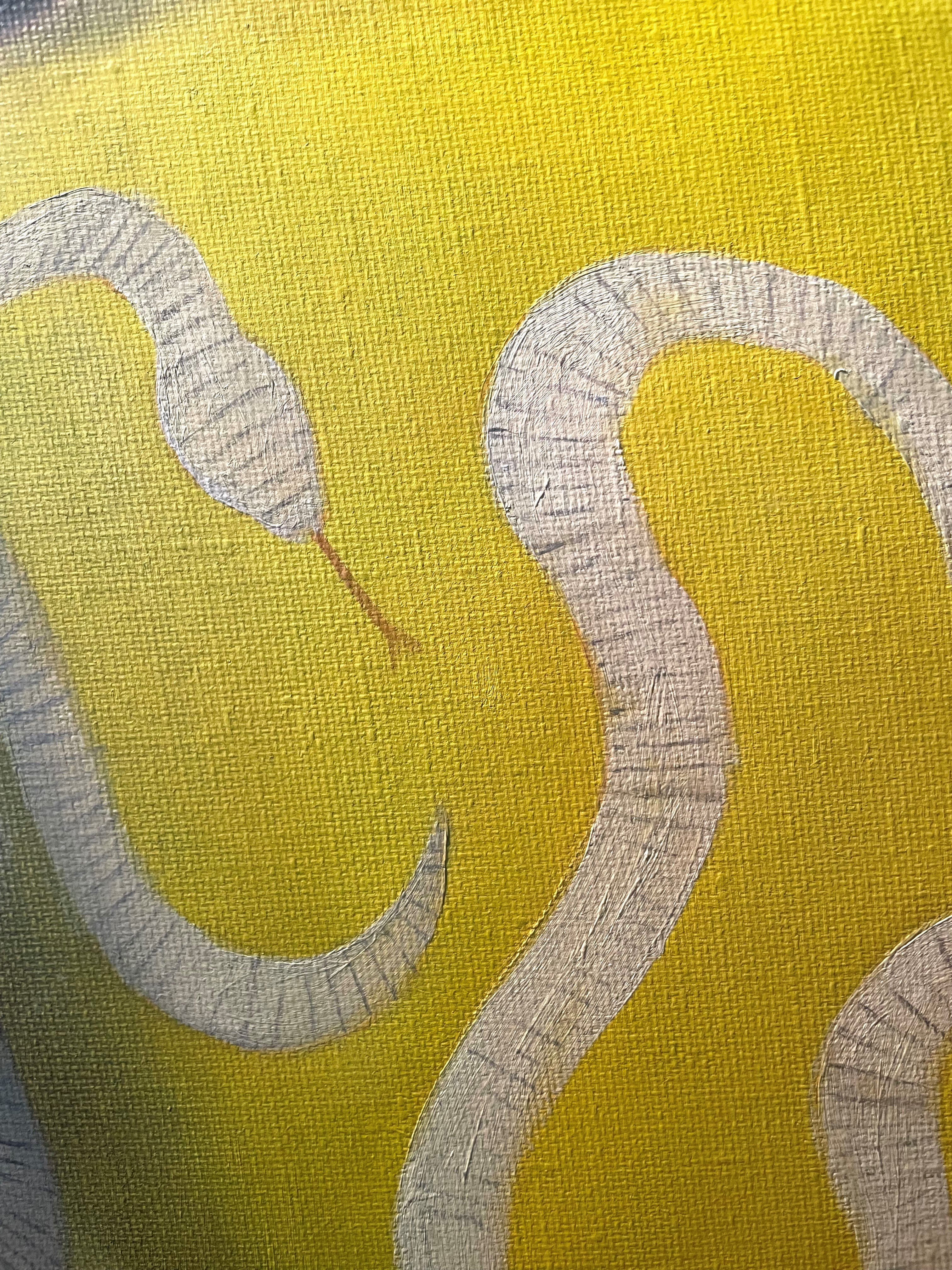
After studying the snake scale pattern, I saw that it consisted of parallel rows. These rows angled out as the snake curved. You can see this above.
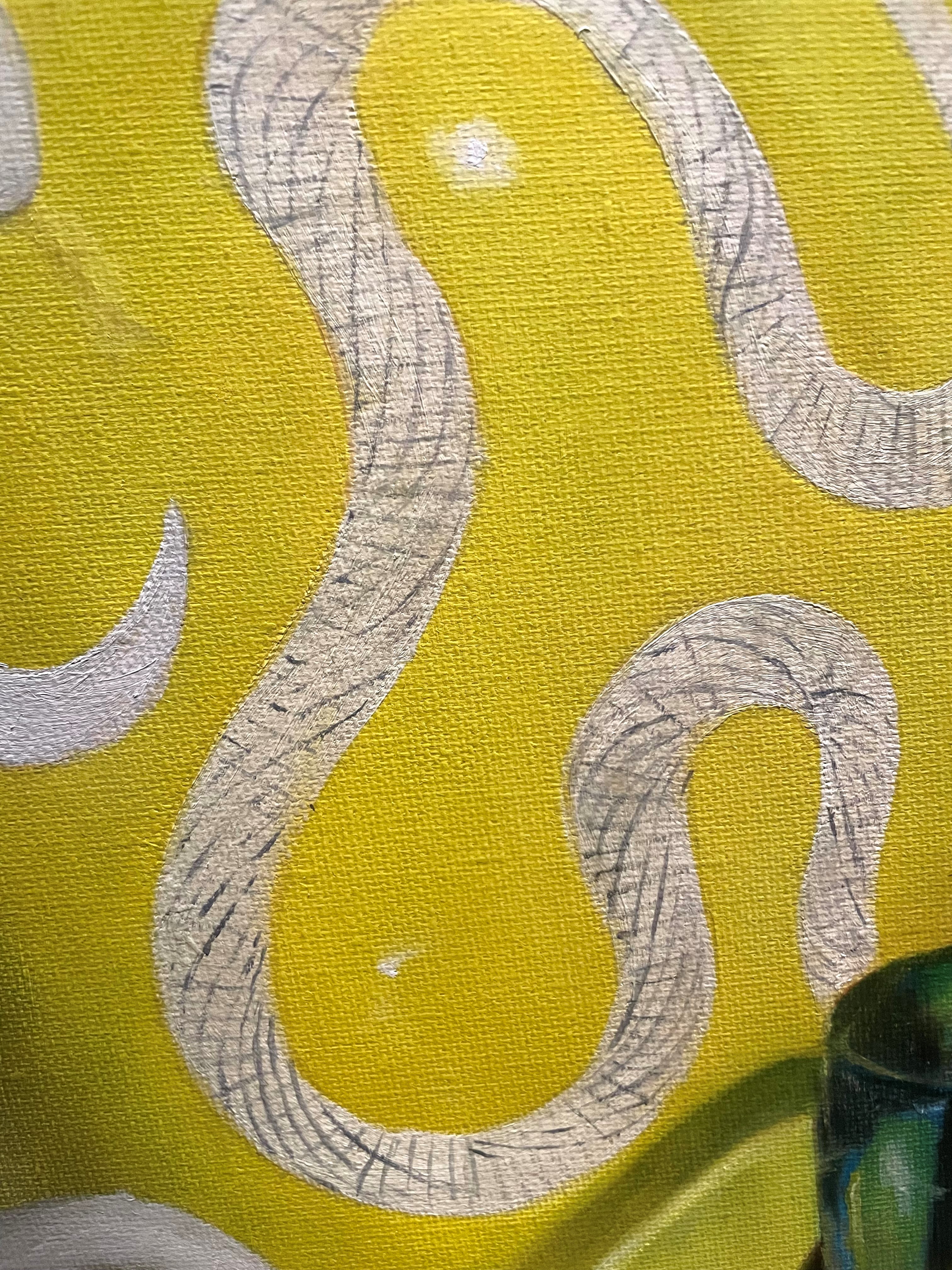
Now, it got complicated. The triangle pattern followed two opposing sets of curving lines that twisted around the snake. Seeing these was very tricky, but I needed them in order to know where to paint the triangles. This is where I wanted to give up!

Finally, I began putting in each triangle. It seemed amazingly fussy, yet I saw no other way to do it. I figured that I would come back later and simplify areas so as not to have it too detailed, which would look odd. Though I am a realist painter, I am not a photorealist, and don’t like to put in too much detail. I find that my subjects look more natural, and as a human would actually see them, if things look as they would if you were standing at the distance that I am painting from.
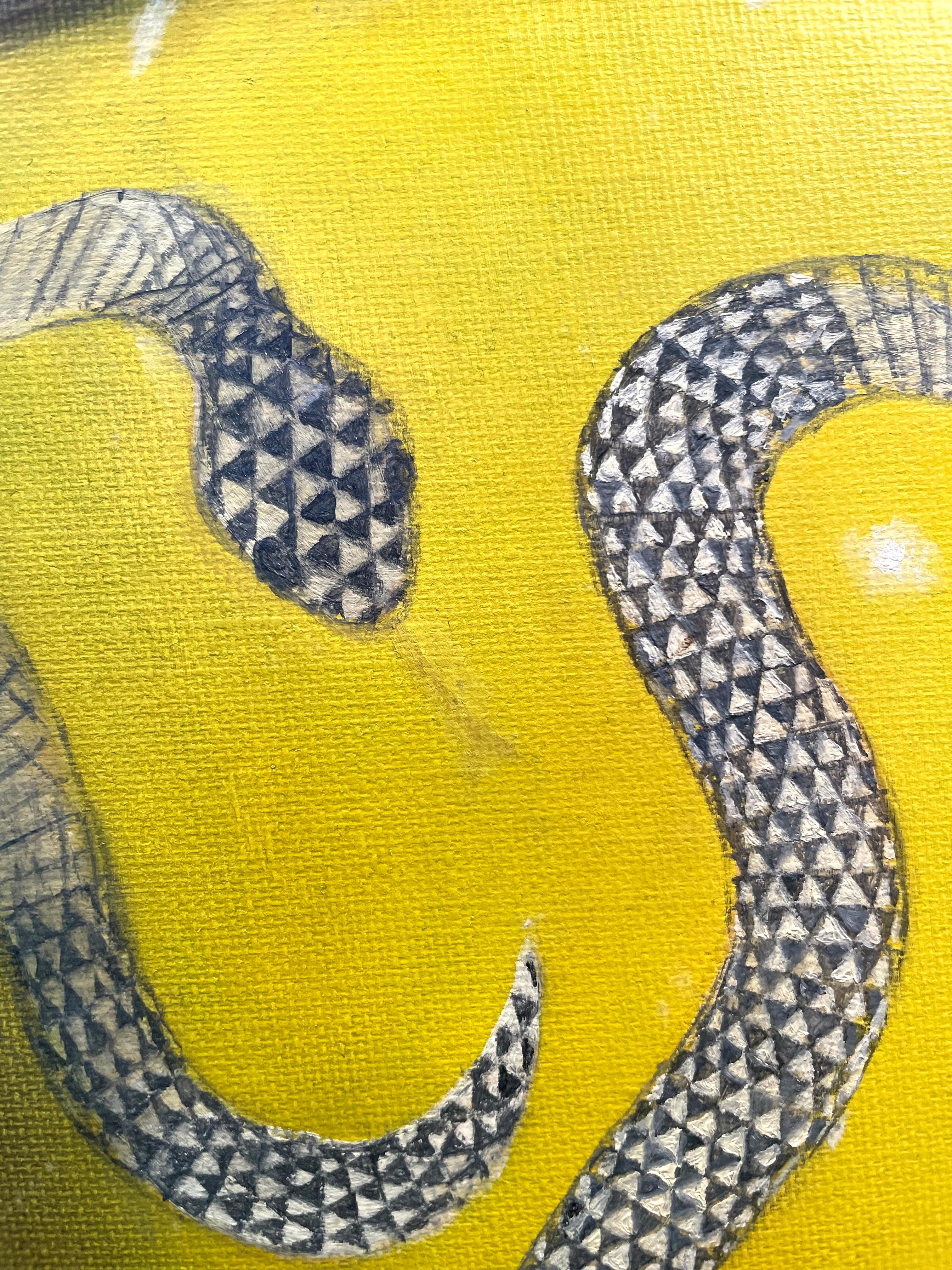
It seemed to take forever. I had to remember that the triangles got smaller towards the edges. I didn’t always capture that, but there was only so much I could do!
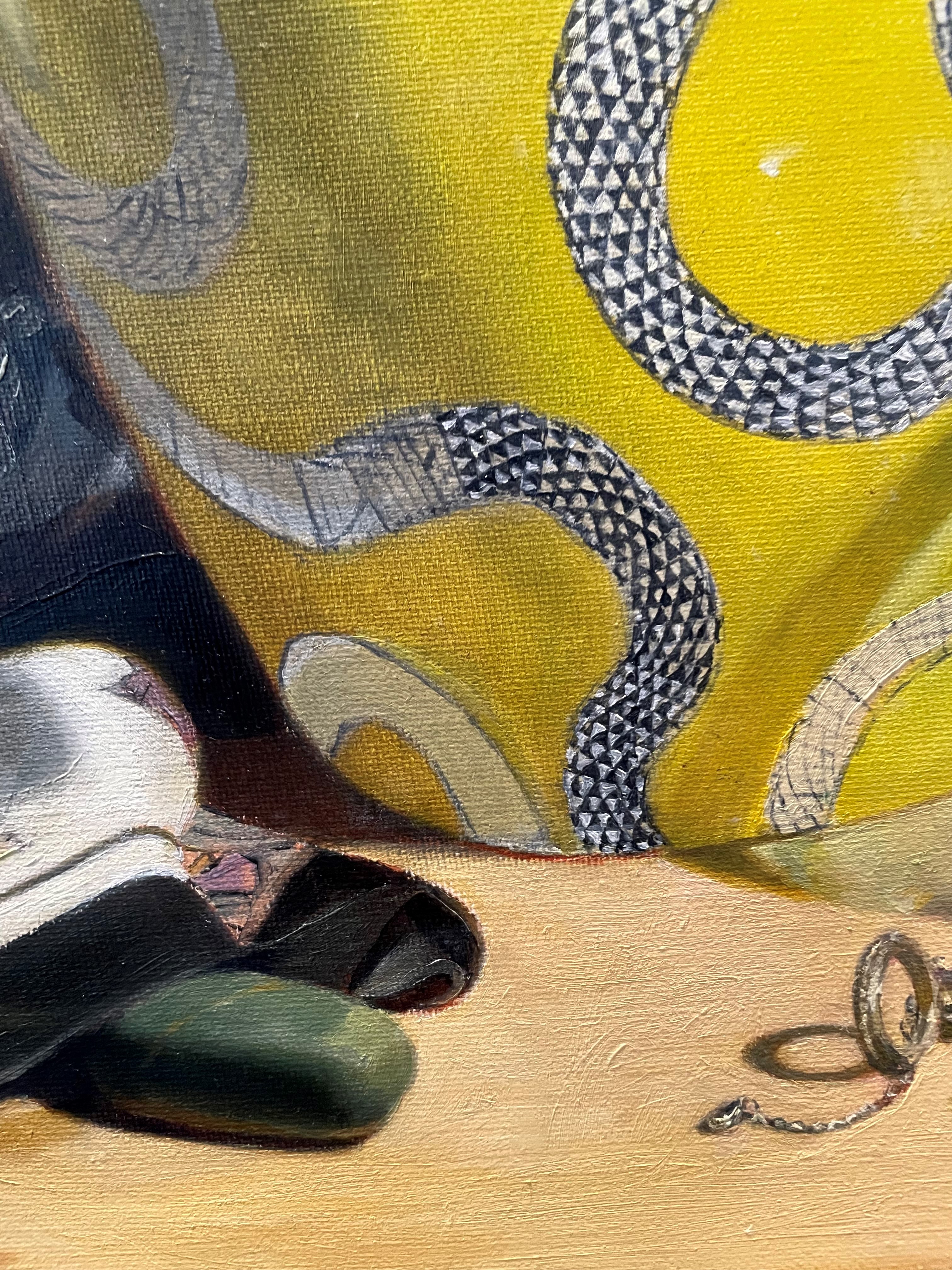
I discovered quickly that my values were off. Normally, I’d glaze an area to darken, or scumble with a light tone to lighten, but this strategy didn’t work with this alternating dark and light pattern. If I glazed the whole snake darker, the lights would get too dark, and if I scumbled the whole snake lighter, the darks would get too light. The only way was to repaint each triangle.

As the pattern turned into shadow, I needed to mute the details. As it turned out, this was very difficult to do. Simplifying such a complex pattern took some doing. I had to see the basic pattern and try to suggest it. Above you can see how I approached this.
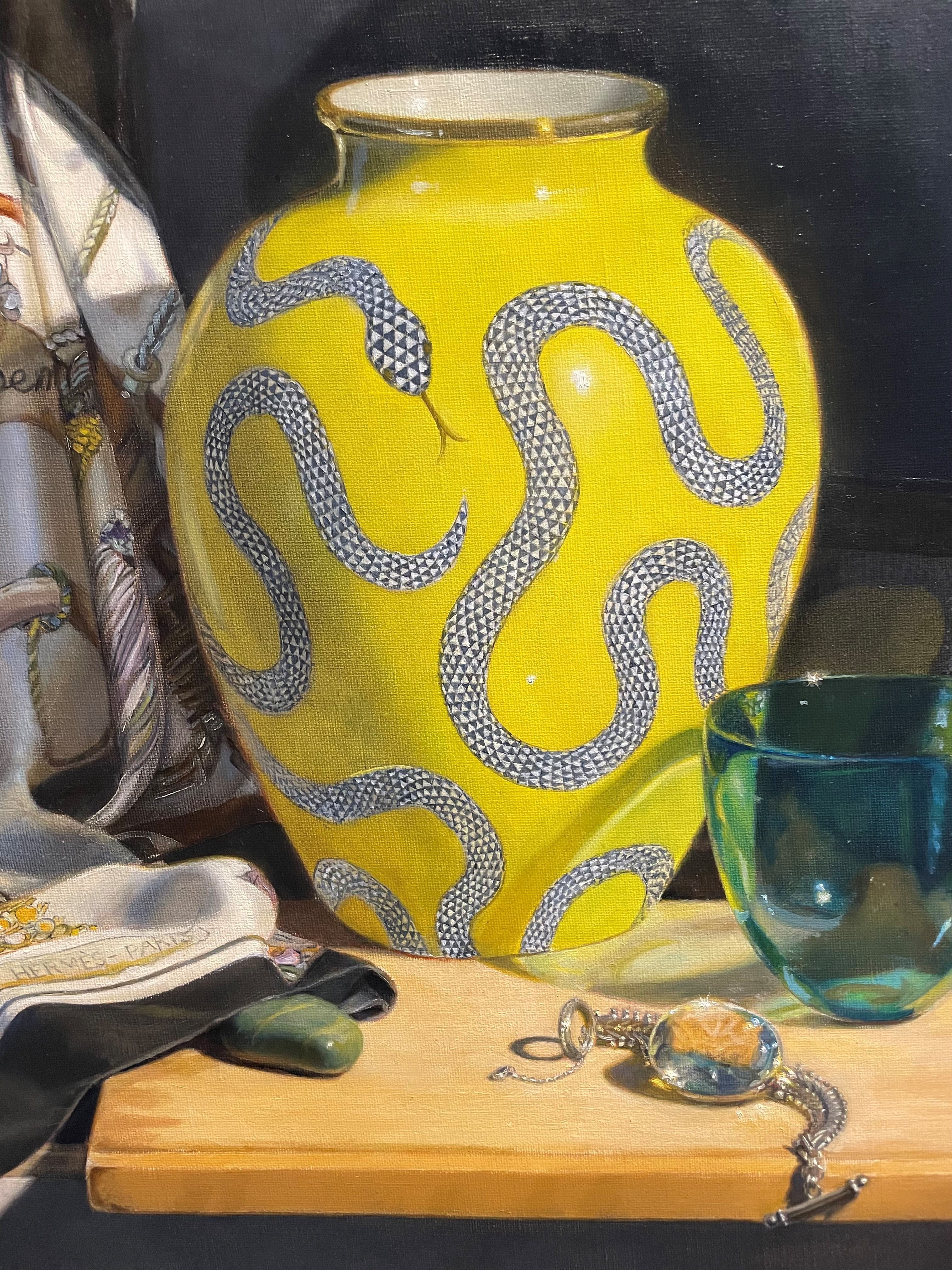
Above is how it looked after I got all of the snake painted. Now was the time to look at the values on the snake and the rest of the vase, so that the pattern would seem to be an integral part of the vase.

Finally, I worked some more on getting the colors and values correct on the shadow side on the left. Shadows on yellow are notoriously difficult to paint- what pigment makes a darker yellow? In this case, it was a greenish hue, since that side of the vase was catching some outdoor cool light from a window. I also made the triangles in the shadow area cooler for this reason. It’s mostly finished, but I’ll probably see a few more things to fix!
 Linda Mann Artist