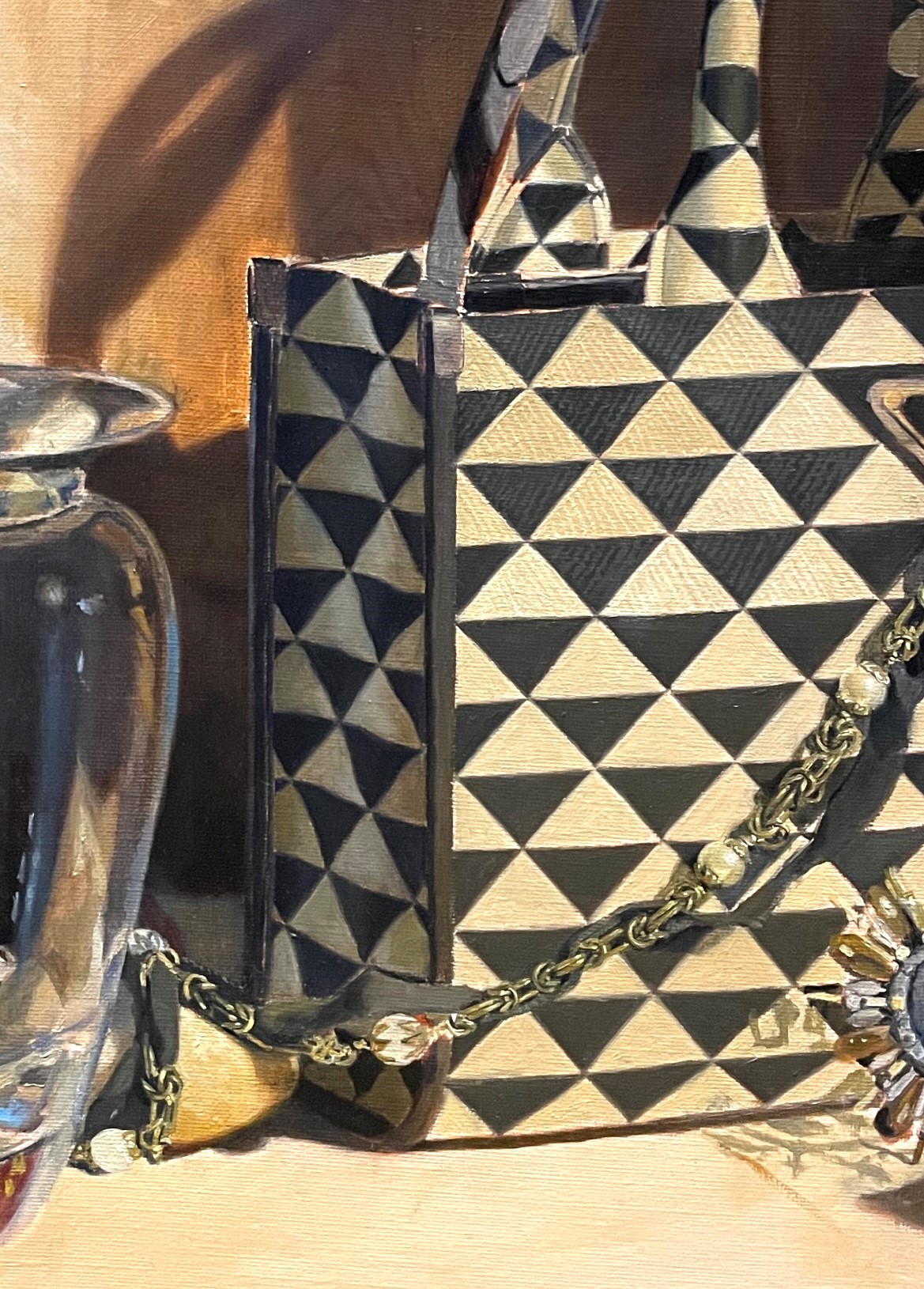
For something as complex as this chain, I didn’t bother to paint it too specifically in the underpainting. Otherwise, I would have to paint the details twice! I just indicated the position of the important links.
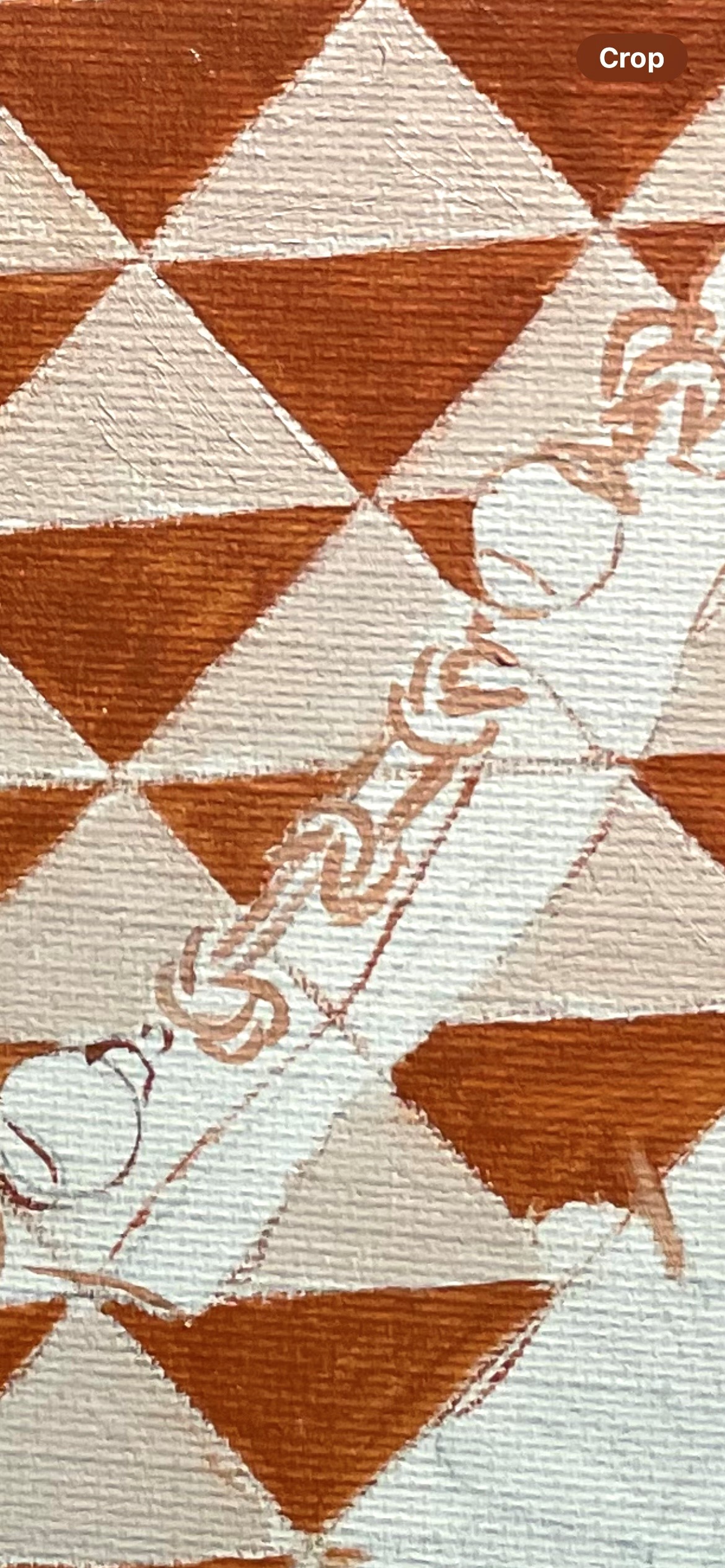
Then I mixed up a few colors: a dark for the shadows, a basic link color, and a highlight. Getting the color right on this was difficult. I wanted it to be a dark muted yellow, but not too green. This is always tricky! Below, the color was too green. I corrected this later. This mix was naples yellow, cobalt blue, and raw sienna. I painted the basic shapes of the links with a #2 sable brush, filling in the dark spaces between and adding just a few highlights. I’ll go back over this many times, so there was no need to work it to a finished state. Working slowly gives me time to check my colors and shapes. If I had worked to completion, and found out that the color was too green, I’d have to do it all over again! This would not be a good use of time.
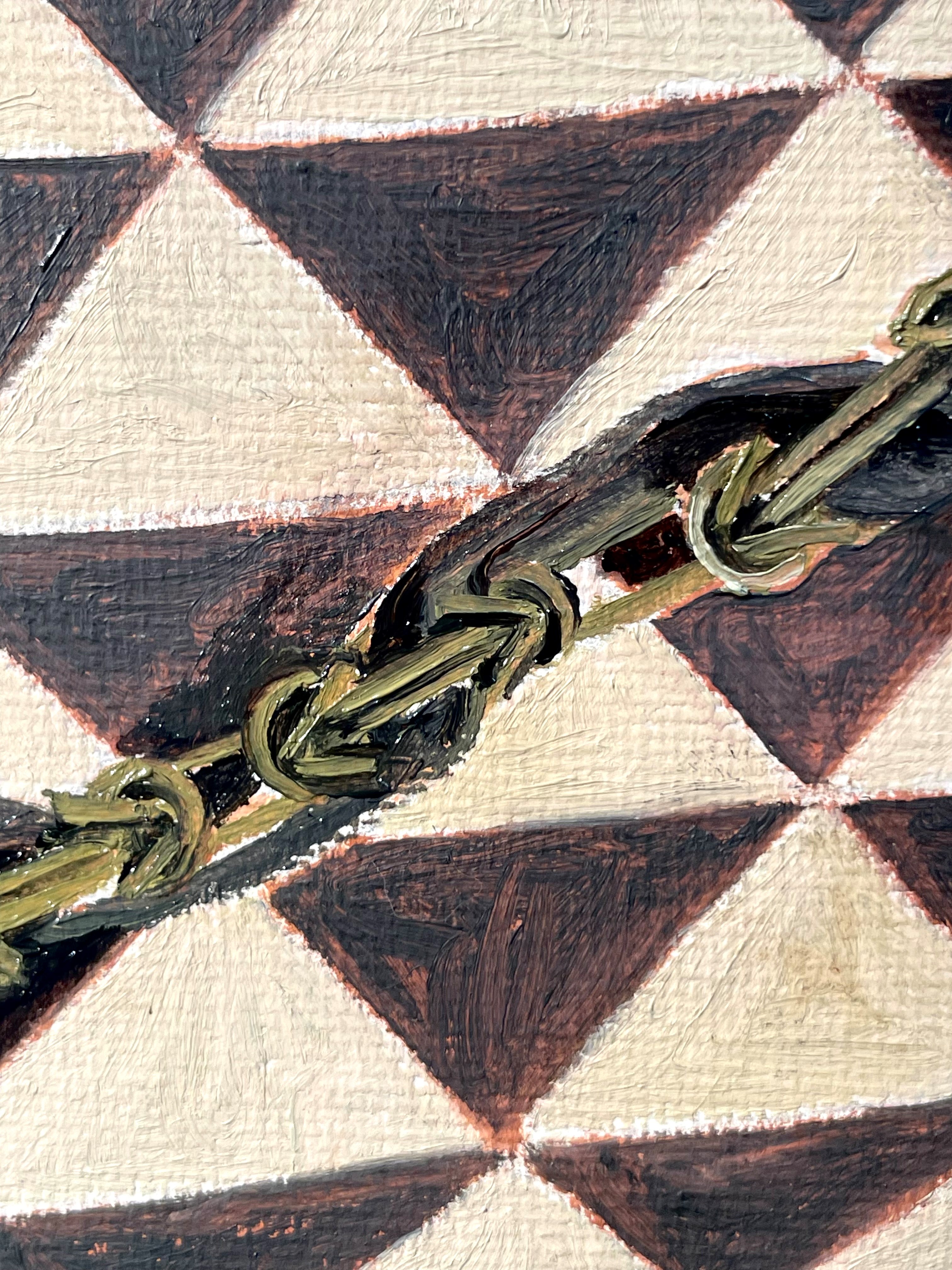
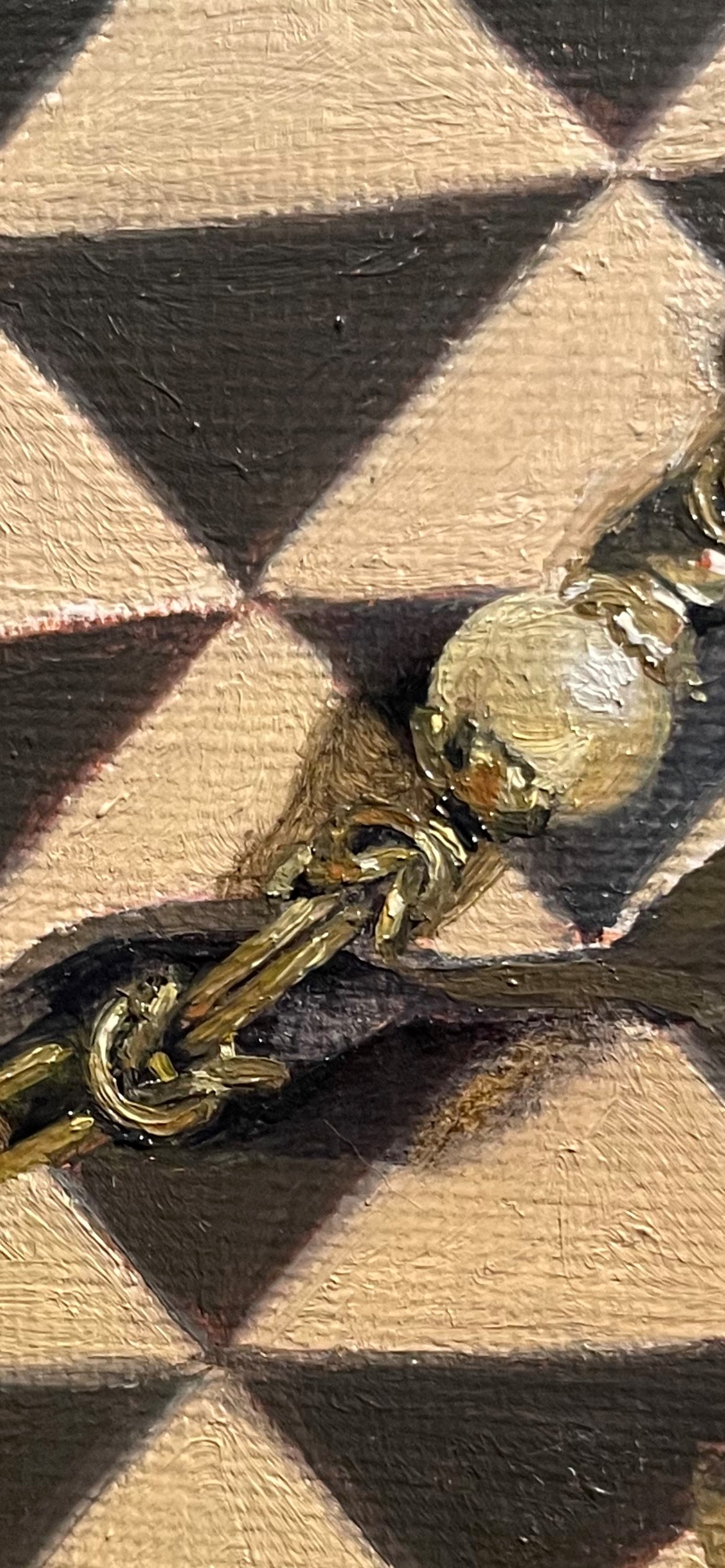
Below, at a later session, I made the color less green, softened up the edges, corrected shapes, and added more highlights. Sometimes on details like these, I have to take a photo and study it up close to understand the complex structures. Occasionally, I’ll even have to paint bits of it from the photo, but I always have to go back and check and paint it from reality. All of the details will not be visible in the finished painting. At the distance I’m observing the set-up, many disappear. Also, colors and reflections do not show up properly in a photo, so I can’t simply copy a photo if I want a look of reality. I’ll go back later and study the set-up, muting many details, correcting colors, and observing highlights and reflections, always using reality as my final guide.
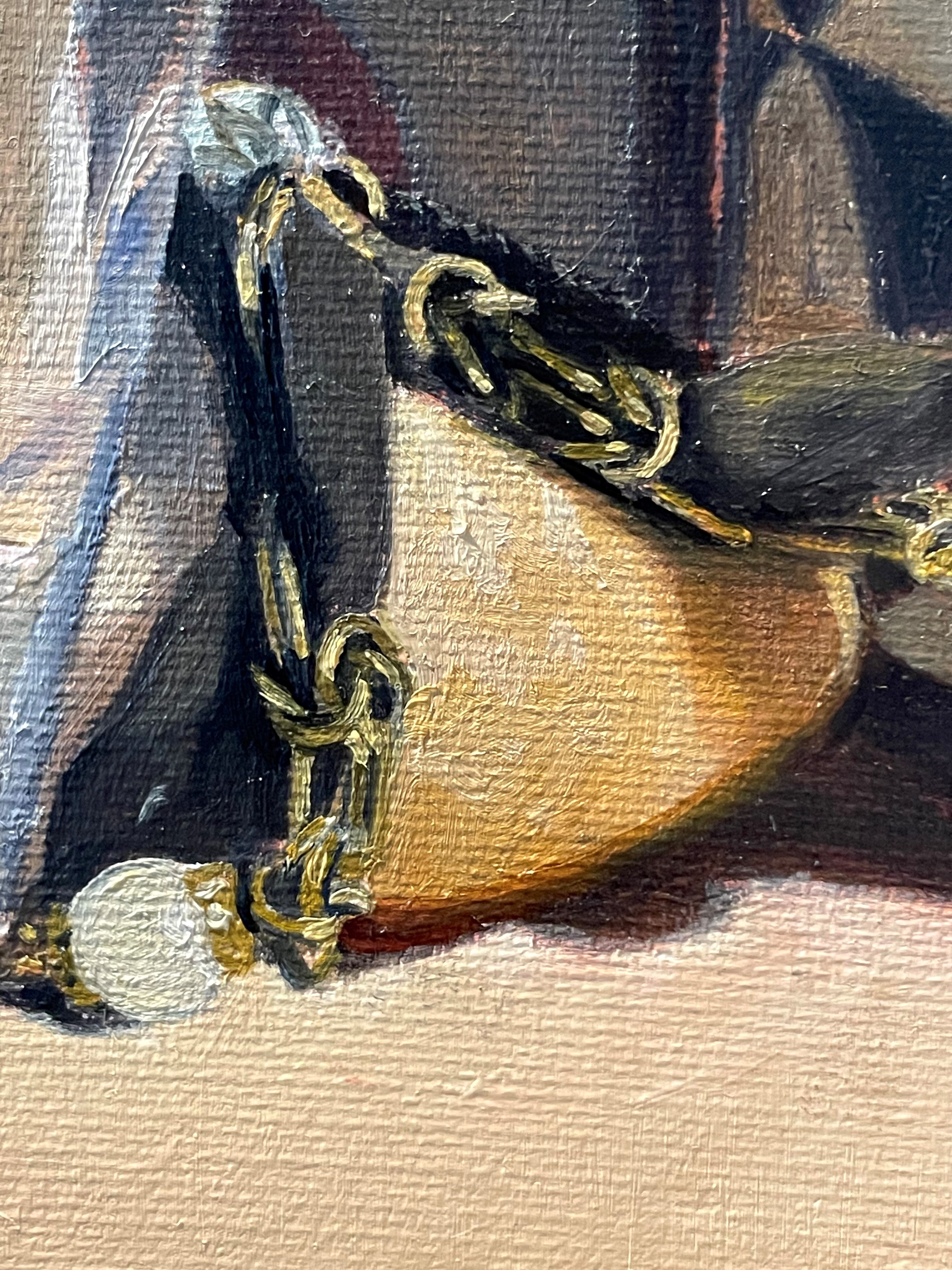
It can be tempting to keep all of the details I worked so hard to see, but if they don’t add to the look of reality and serve the composition, there is no place for them in the finished painting.
 Linda Mann Artist