There is a lot of work to do before actual painting commences. First, there is the drawing. This always takes much time and effort. If the drawing isn’t right, nothing that follows will be right. Of course, the more detailed the objects, the more time it takes. This Prada handbag has a very complex pattern. If the bag were a strictly regular shape, it wouldn’t have been so bad, but the fabric is flexible and forms subtle curves- tricky!
I always draw from life, not from photos. You can’t understand forms by simply copying a photo. You always must check reality. Photos can distort and they prevent you from seeing.
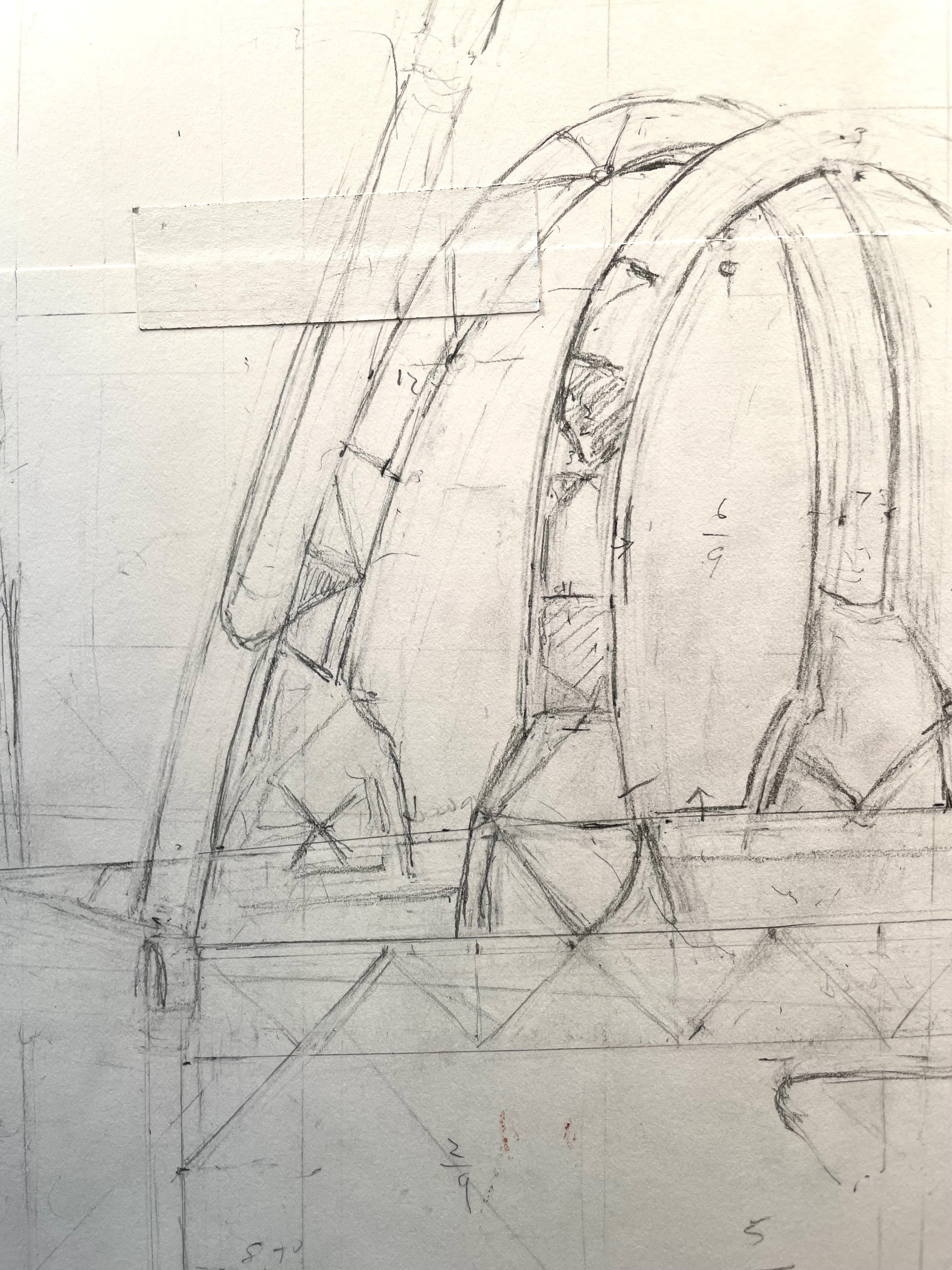
Also, the jewelry is very difficult to see. I had to get very close to study the links in the chain and the way the black ribbon is woven through it.
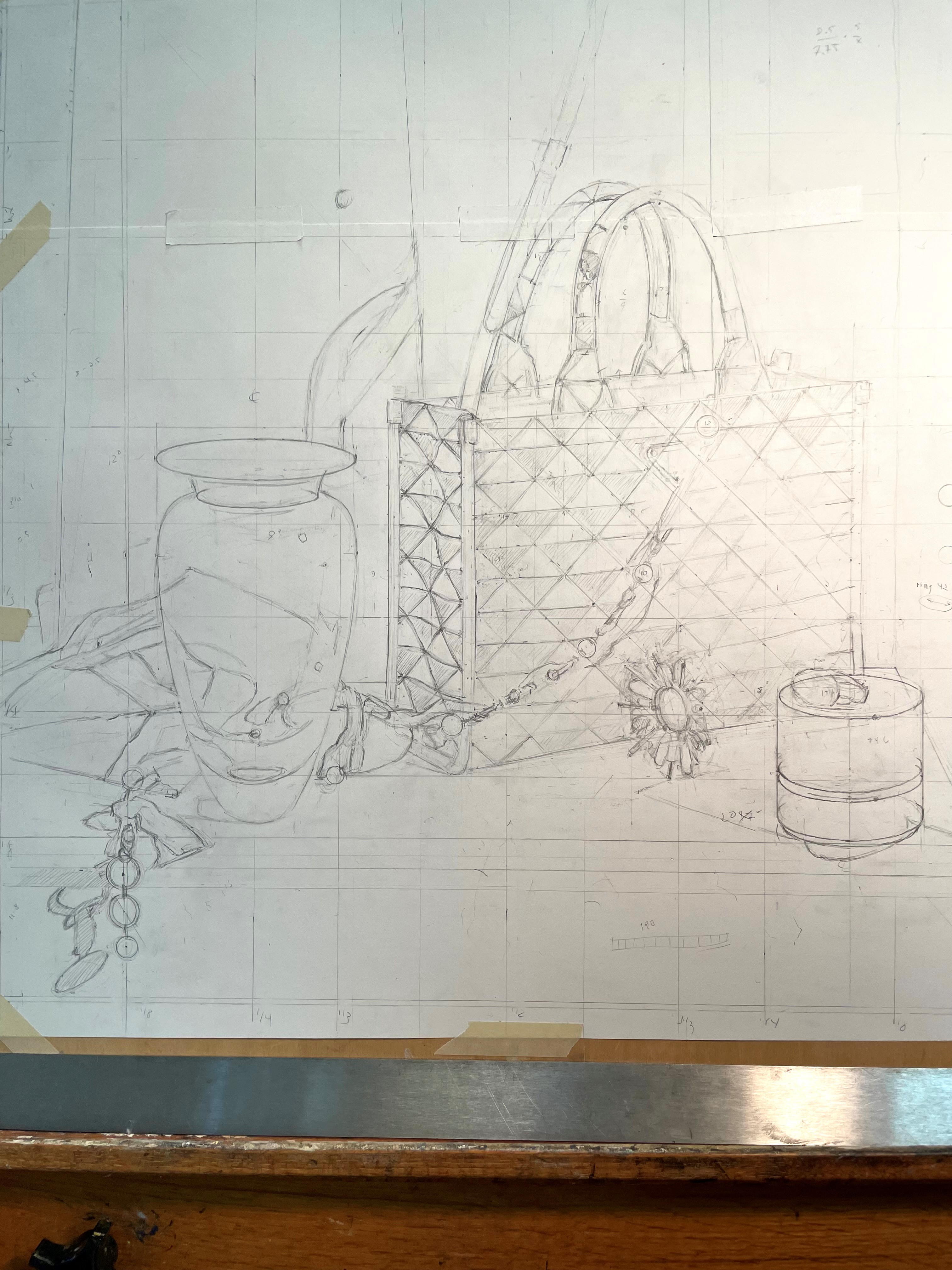
I use the drawing stage to fine-tune the design of the composition. This is where I choose exact placement of objects, considering every line and angle. I’m not simply copying the set-up that’s in front of me but making sure that there are no confusing alignments or distracting relationships. I take this opportunity to look at the composition in 2 dimensions, as a design, and check that it is working. I might move an object over, enlarge or reduce the size of something, or change an angle. Working from a photo would discourage this kind of fine-tuning, as it’s very tempting just to copy the photo indiscriminately.
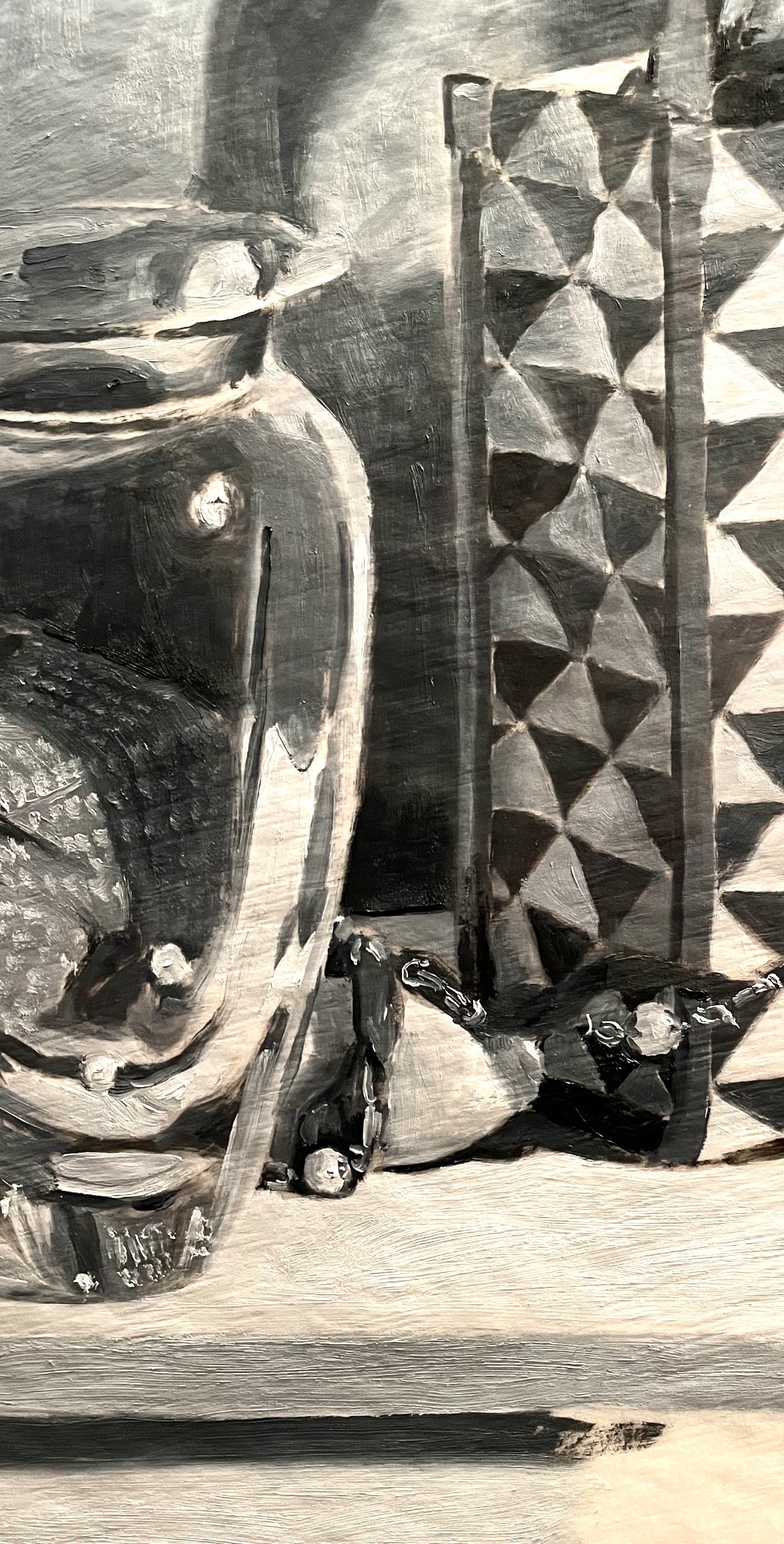
When the drawing is mostly complete, I tape a piece of tracing paper over it and paint a quick study in shades of gray. It’s easier for me to judge the composition without the distraction of color. Above you can see how loosely this is painted
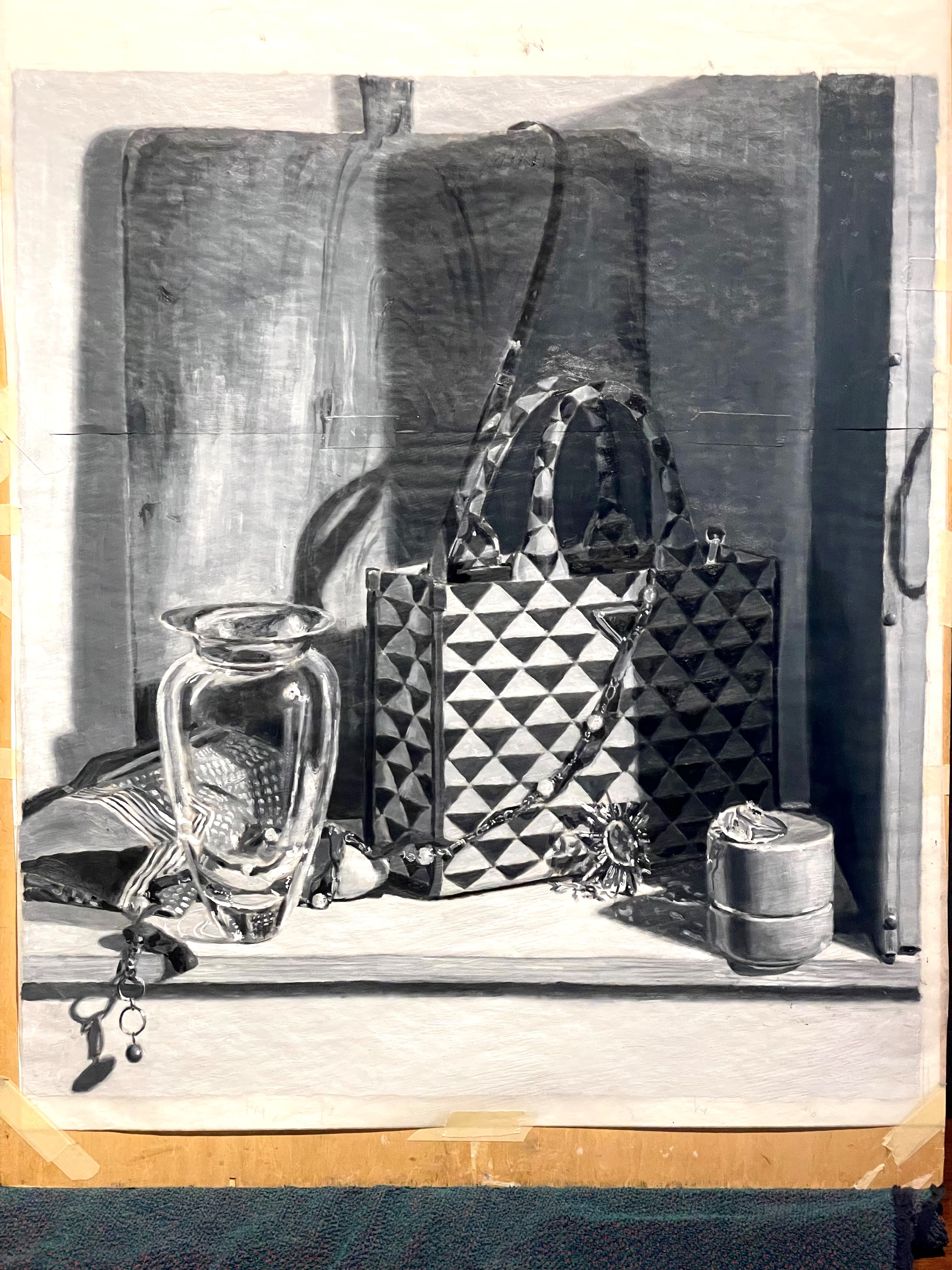
Now, I can easily judge if I need to make any changes to the composition. If I do, I go back to the drawing and incorporate them.
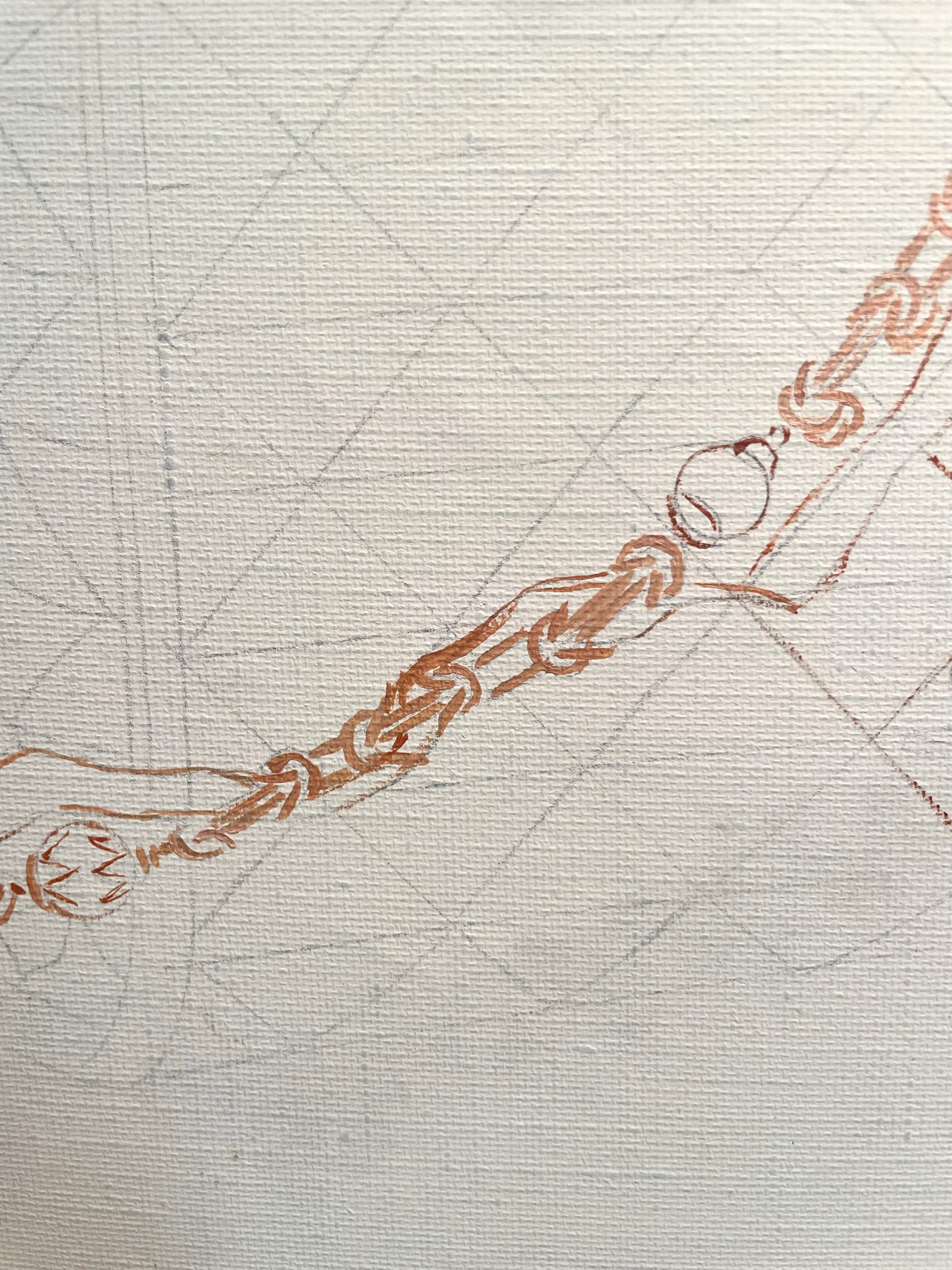
Finally, after transferring the drawing to my canvas, it’s time for the underpainting. I paint this in shades of burnt sienna and lead white in a very thin layer with no visible brushstrokes. It’s meant as a low-stress way to begin painting, as well as giving a unified tone to the whole painting. I paint it in much lighter values than the finished painting will be. I take great care to preserve the drawing by keeping the edges sharp. I also constantly check the set-up instead of merely following the lines I have drawn. Every time I put a mark down, I want it to be in response to what I’m seeing in the set-up. Otherwise, if I merely trace my previous drawing, error always creeps in.
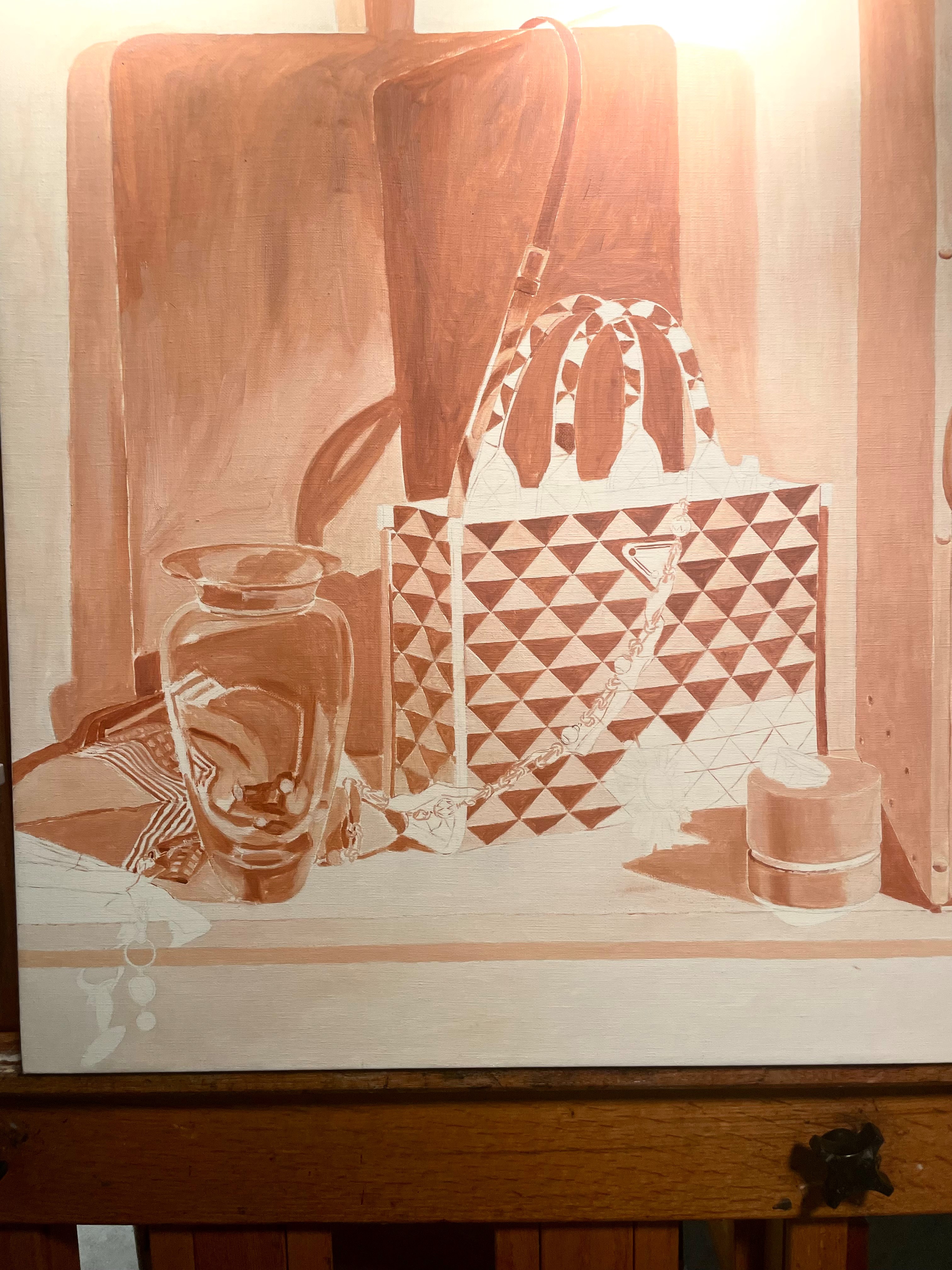
When the underpainting is dry, in a week or two, I’ll begin painting in earnest!
 Linda Mann Artist